Skip to content
Carbon River Capital

Strategy

Sale-leaseback real estate

Many privately held companies own the buildings they operate from. A sale-leaseback is one way to change that without moving. What follows is how it works, why a business might or might not want one, and what an investor looks at before buying.

Nothing here is legal, tax, accounting or investment advice. An owner considering a sale-leaseback should work through it with qualified advisors.

01

What a sale-leaseback is

In a sale-leaseback, a company sells the real estate it occupies and, at the same closing, signs a lease to stay in it. The company goes from owner to tenant. Operations do not move. What changes is who holds title, and the fact that the company now pays rent and has the sale proceeds in hand.

These leases are usually long. Many are net leases, under which the tenant continues to pay property taxes, insurance and maintenance much as it did as owner, though the split of responsibilities is negotiated deal by deal.

02

Why a business might consider one

  • Capital for the business. Equity in a building is hard to spend. Selling the property converts it to cash for equipment, inventory, hiring, an acquisition or paying down debt.
  • An alternative or a complement to borrowing. A sale generally raises more than a mortgage on the same property would, because a lender advances only part of the value.
  • Ownership transition. When a company is being sold or handed to the next generation, separating the building from the business can make both easier to value and to divide.

A sale-leaseback is not right for every company. The seller gives up ownership of the building and whatever it may be worth in the future. Rent is a fixed obligation that continues in a bad year. A long lease reduces flexibility if the business outgrows the space or needs less of it. For an owner whose building is the retirement plan, or whose business may need to move within a few years, keeping the property may be the better choice.

03

How real estate capital can be redeployed

The test is simple to state: can the business put the proceeds to better use than the building does by sitting on the balance sheet? That is a question for the owner and the owner's advisors, not for the buyer.

In the Opus Packaging transaction, the sale freed capital for production capacity and equipment while the company kept its Caledonia headquarters facility and control of its operations.

04

Lease structure considerations

Both parties will live with the lease for a long time, so it deserves more attention than the sale contract. The main points:

  • Term and renewals. The initial term and the options to extend it.
  • Rent and escalations. Starting rent, and how it changes over time.
  • Who is responsible for what. Taxes, insurance, routine maintenance, and the expensive items: roof, structure, parking lot and mechanical systems.
  • Assignment and subletting. What happens if the business is sold, merges or wants to sublease part of the building.
  • Expansion and alterations. Whether the tenant can modify the building, and whether the landlord will fund or build an addition.
  • Purchase rights. Some leases give the tenant an option or a right of first refusal to buy the property back.

05

Property valuation considerations

Price and rent are two ends of the same number. A higher rent supports a higher price, which can tempt a seller to agree to rent above what the market would pay. That means more cash at closing and a heavier burden every month after. It also leaves the investor with a lease the building could not replace if the tenant left. We prefer rent near market and a price that follows from it.

An investor also looks at what comparable buildings have sold for, what it would cost to build the same thing today, and what the building would be worth vacant.

06

Tenant and business credit considerations

In a sale-leaseback the investor is underwriting a business as much as a building. Expect questions about financial statements, the company's history, customer concentration, ownership and management, and how rent compares with the earnings of the operation in the building. How essential the facility is matters as well. A headquarters and main production plant is a different commitment than an overflow warehouse.

07

Real estate underwriting

We begin with the downside, which here means the day the tenant is gone. Who else could use the building? The answer depends on function and location: clear height, loading, power, truck access, room to expand, highway access and the labor nearby. Specialized improvements may be valuable to the current occupant and worth little to the next one. Environmental condition is reviewed early.

The more general the building, the less the investment depends on one company.

08

Long-term alignment between owner and occupant

After closing, the two parties are in a relationship that may last for decades. The tenant wants a landlord who will answer the phone, be reasonable about alterations and have the capacity to help if the company needs more space.

We are owners and developers by background, so an expansion request is something we know how to evaluate and build. The principals who negotiate the transaction remain involved afterward.

09

Sale-leasebacks in West Michigan

West Michigan's economy includes many privately held manufacturers, distributors and service companies, and plenty of them operate from buildings the founders bought or built.

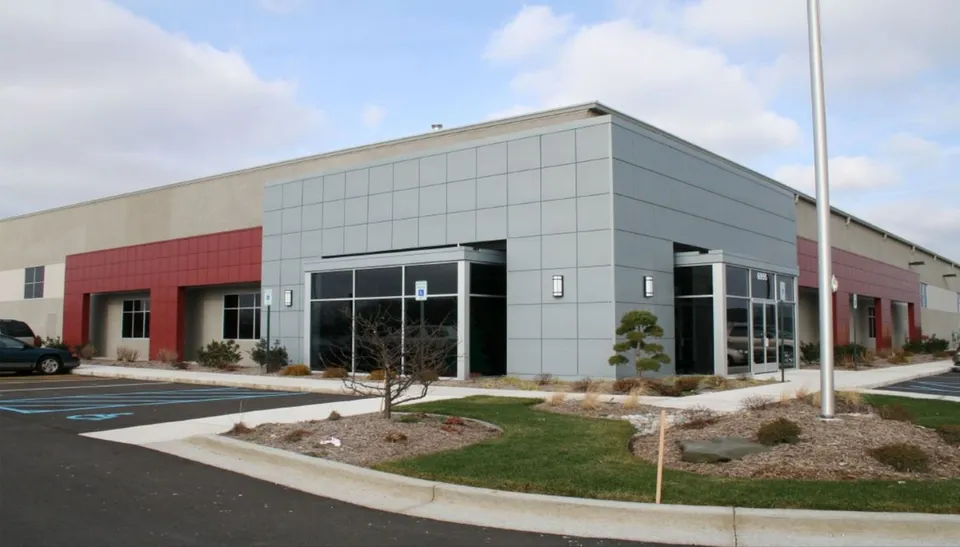
Carbon River's Opus Packaging investment is an example. Opus Packaging Group is a corrugated and packaging manufacturer with Michigan roots, founded in 1984, with its headquarters on Southbelt Drive SE in Caledonia. Carbon River acquired the real estate and leased it back to the company under a long-term lease.

Our affiliate, Third Coast Development, has completed sale-leasebacks of its own in Grand Rapids. At Proos Manufacturing on Oak Industrial Drive NE, it paired a purchase option with a long-term lease back to the company, which gave the owners control over timing. At the Cherie Inn, a restaurant in the East Hills neighborhood, the operator sold the building and continued to run the business under a lease.

Being local has practical value: we know what comparable space leases for, and the owner can meet the people who will be the landlord.

Entrance of 6995 Southbelt Drive SE in Caledonia, a single-story industrial and office building with grey and red panels
Opus Packaging, Caledonia, Michigan View investment: Opus Packaging

Start a conversation

If you own the building your business operates from and want to understand what a sale-leaseback could look like, we are glad to talk it through, including whether it makes sense at all. Brokers and advisors are welcome to contact us directly.